The Sea View Is Not Always the Best Seat
Choose a tennis seat for clear sightlines and sustained attention, so you can follow rallies while still enjoying the coastal setting around the court.
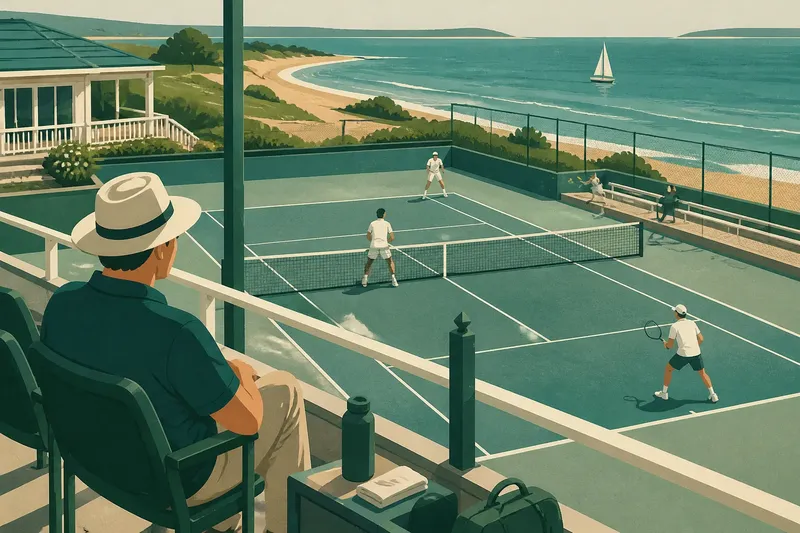
The most common mistake when choosing a tennis seat at a coastal court is picking the spot with the grandest sea view. It can cost you the match’s details: a fence post may hide the center line, or a distant angle may make the ball’s landing hard to judge. Start with what you want to watch, then decide how much shoreline belongs in the view.
A good seat helps you read the match, not just see the court. Decide whether you want to follow court positioning, focus on one player, or watch casually while enjoying the setting. Each goal favors a different angle.
Choose an angle that fits the match
A raised seat behind a baseline can make court depth and serving positions easier to read. It may also make the far player look smaller and compress movement. A sideline seat often reveals spacing and lateral movement, but the nearer player can obscure the far side during a rally.
For a broad view of tactics, look for a position where you can see both ends without repeatedly turning your head. If you want to follow serve placement, prioritize a clear view of the baselines. If you care more about footwork and the direction of exchanges, try the sideline.
There is no universal best angle. The right choice depends on whether you want a complete view of the court or a closer sense of the players’ movement.
Check the court’s fixed sightline obstacles
Sit in the candidate seat before deciding. A standing view can hide a fence rail that crosses the net, a planter that blocks a corner, or people in front whose heads line up with the far baseline. Look through the space where your eyes will actually be.
Scan both service boxes, the net band, and the far baseline. Follow a point from serve to rally: does the ball disappear behind a post, advertising board, or the near player? An obstruction near the center of your view matters more than one at the edge, where the ball rarely travels.
Prioritize an unobstructed playing area over a perfect view of the surroundings. You do not need to see every player’s expression to follow the match.
Use the coastal setting without making it the main event
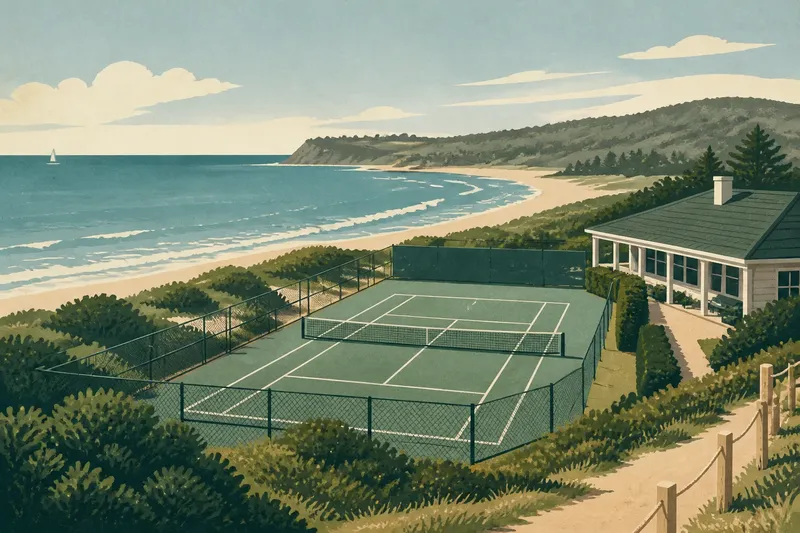
A glimpse of water, dunes, or a harbor can give a match a strong sense of place. But a seat facing directly toward the sea may pull your attention away from play or make the far end difficult to distinguish against a bright background.
Try an open corner or a bench near a side opening. These positions may frame some shoreline while keeping the court in view. A place that makes you turn away from the match for the scenery is better suited to a break than to following a close point.
Imagine you arrive at a seaside club while a match is underway. The promenade bench offers a clear sea view, but a fence post crosses the center service line. A quieter seat near the clubhouse shows the full net and both service boxes, though the water is mostly out of frame. If you want to follow the match, choose the clubhouse seat and enjoy the coast during changeovers.
What seat questions should you settle before choosing?
Is a baseline seat always the clearest?
No. A baseline angle can reveal court depth, but a low barrier or chair may block the far end. Check for a clear view of the far baseline and both service boxes from the seat itself.
Is the sideline better for watching rallies?
A sideline angle can make spacing and lateral movement easier to follow. Check that the near player will not repeatedly block the center of the court.
Where should a new tennis spectator sit?
Choose a place with a broad view of both players and the whole court. An open corner or a middle seat behind a baseline can make it easier to follow the ball without knowing tactical terms.
Should you move if your view is blocked?
If club rules allow it, consider changing seats during a natural break rather than while a point is underway. Before moving, check whether the obstruction is fixed or simply caused by someone standing temporarily.
Make a quick decision from the seat itself
Before settling in, watch a serve and a rally that reaches the far side. Check three things: whether the ball stays in view, whether an obstacle cuts across the playing area, and whether you can see both ends of the court without leaning. If the ball repeatedly vanishes behind a post or player, try another angle.
- Check whether both service boxes are visible; if either is blocked, choose a seat farther from the obstruction or on the opposite side.
- Check whether the far baseline is clear; if a rail or barrier cuts across it, try a higher or more centered position.
- Check whether the net and center service line remain visible; if a post hides them, move toward an open corner or another section.
- Check whether the near player repeatedly blocks the far side; if so, choose a more elevated seat or a different angle.
- Check whether the ball disappears from view during a rally; if it does, watch another point from a nearby seat before settling there.
- Check whether the shoreline draws your eyes away from play; if following the match matters more, choose a seat that keeps the court central and save the water view for breaks.
Do not spend time calculating an exact sun path or searching for a supposedly perfect seat. A brief view of the court and its fixed obstructions is usually enough to make a sensible choice.
Settle in without blocking someone else
Keep bags and other belongings below the sightline and within your own space. If you need to change places, wait for a game break or changeover and follow the club’s seating customs. Quiet movement helps other spectators keep their attention on play.
After looking toward the water or speaking with a companion, use the server’s position and the players’ ready stance to find the action again. The useful goal is not to watch every movement; it is to know where to look when the next point begins.
The best tennis seat near the shore is the one that lets you follow the action without fighting the view. If the court remains clear and the angle suits the way you watch, the sea can stay a pleasant part of the setting rather than a distraction.