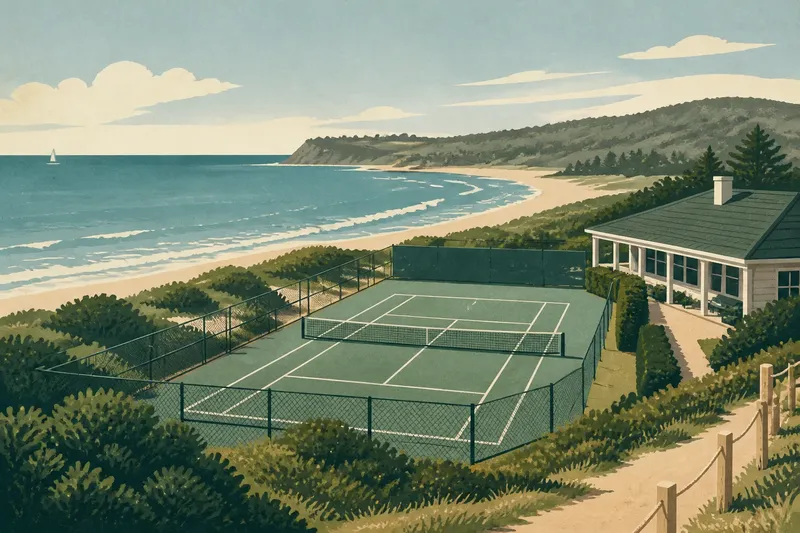
From Seaside Pavilion to Tennis Clubhouse
A seaside pavilion tennis clubhouse can make match days more comfortable. Arrange rooms, routines, and shared spaces for damp gear, changing weather, and club life.
The common mistake with a seaside pavilion tennis clubhouse is treating it as a changing room with a view. Players then have nowhere comfortable to gather before or after a match, and damp gear can take over the room. Shape the clubhouse around the rhythm of coastal tennis: arriving from the court, warming up after a breezy set, and sharing the space between sessions.
Give each room a clear role
Start with the building’s everyday uses. Players may need somewhere to change shoes, check court arrangements, and leave bags. Parents waiting through a lesson may want a dry seat with a view of play. Members may want a room for a post-match conversation. These needs can coexist when each space has a clear purpose.
Use furniture and signs to make those purposes obvious. A porch or lobby can serve as a meeting point; a separate room can hold club gatherings; changing areas can remain private. Keep the route between them simple, and avoid placing seating where it blocks a busy doorway.
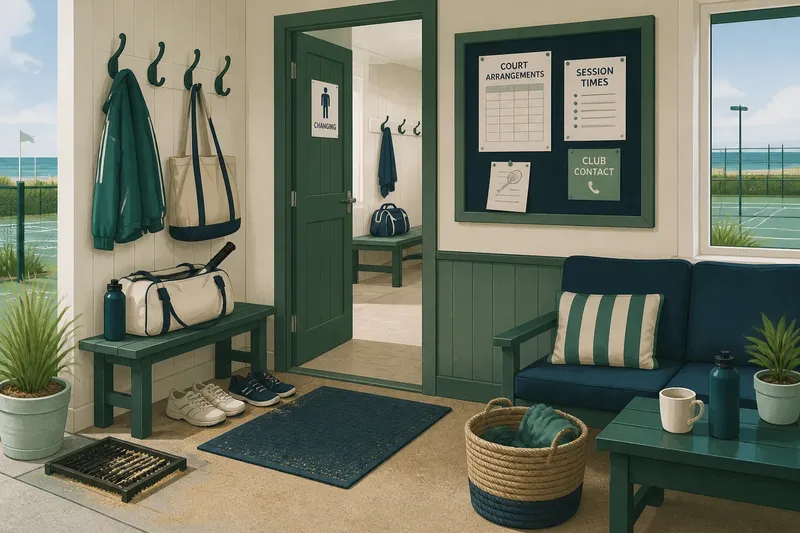
Put current club information where players naturally pause. A noticeboard near the clubhouse seating can carry court arrangements, lesson times, and a contact route for questions. Remove old notices so the useful information stands out.
Set up for salt air, damp clothing, and sand
Salt air, wet towels, sandy shoes, and gusts through an open door can make a clubhouse feel neglected even when it is clean. A general-purpose room becomes harder to maintain if wet gear, storage, and social seating all compete for the same space.
Give shoes and bags a defined place near the entrance, away from the main seating. A boot scraper outside, a washable mat inside, and hooks for jackets help contain grit and damp. Put a bin near the spot where players finish unpacking, rather than across the room.
Choose wipeable surfaces and furniture that can move aside for a lesson briefing or club gathering. For a clammy room, check simple causes first: wet towels left overnight, blocked vents, or doors kept shut after a busy session. Follow the manufacturer’s instructions for fixed heating and ventilation systems, and ask a qualified tradesperson about repairs. It is not worth buying coastal-themed decorations before the room has a dependable place for wet kit.
Make clubhouse routines easy to follow
Small habits make a shared room feel cared for. Agree where shoes, bags, used cups, and damp clothing belong, then use simple signs or familiar furniture cues to show the arrangement. Keep the wording welcoming rather than scolding.
Decide who checks the room after a session and who handles work that needs specialist skills. Routine tidying can be shared among members; repairs to electrical, heating, or ventilation systems should go to a qualified professional. Keep responsibilities visible so people know what they can do and what they should report.
Say you are setting up a beginner session on a breezy afternoon. The porch has a bench, the inner room is reserved for changing, and a board beside the seating lists the meeting point and session time. Players arriving from the court can gather on the bench, while those changing have a separate space. The observable result is a clearer start to the session, with fewer people waiting in the doorway.
How should a seaside tennis clubhouse support club life?
What should the shared room provide?
Offer dry seating, a clear place for bags, and current information about club sessions and court arrangements. Keep changing facilities separate so players can use the common room without disturbing someone getting ready.
How can the room stay useful on wet days?
Keep a washable mat and hooks near the entrance, and place social seating beyond the path used for wet gear. If damp clothing still gathers by the chairs, move the hooks or add a clearly marked drying area.
What belongs on the clubhouse noticeboard?
Post current court arrangements, session times, and a contact route for club questions. If a notice is out of date, remove it so players are not left choosing between conflicting instructions.
How can newcomers learn club customs?
Explain practical habits in plain language, such as where players wait for a court and where used cups go. If newcomers keep asking the same question, add a short note beside the place where the answer matters.
Let the clubhouse reflect the coast without adding clutter
A clubhouse can acknowledge its setting through practical choices: hooks for windbreakers, a mat that catches sand, and seating positioned away from drafts. Club customs also take shape through repeated use, such as where players wait between sets and how members invite a new player into conversation. Make those routines visible instead of expecting newcomers to guess.
It is not worth filling the room with decorative coastal objects or building an elaborate events calendar before the basic space works. A clean place to sit, a dependable spot for gear, and clear information do more for daily club life.
Adjust the layout to how members use it
After ordinary sessions, notice where people gather, where bags accumulate, and which signs players overlook. If bags keep ending up beside the seating, move the hooks or bag area closer to where people arrive from the court. If the shared room stays empty, consider whether its purpose or opening routine is unclear before adding furniture or events.
When planning a seaside pavilion tennis clubhouse, use these observations to make one practical change at a time. A well-placed bench, a clear home for wet gear, and routines people can follow help the building support the club through changing coastal conditions.