Promenade or Back Street? Choosing Your Route to a Coastal Tennis Match
Choose a route to a coastal tennis match that leads to the visitor gate, with clear cues for deciding between a public promenade and a quieter street.

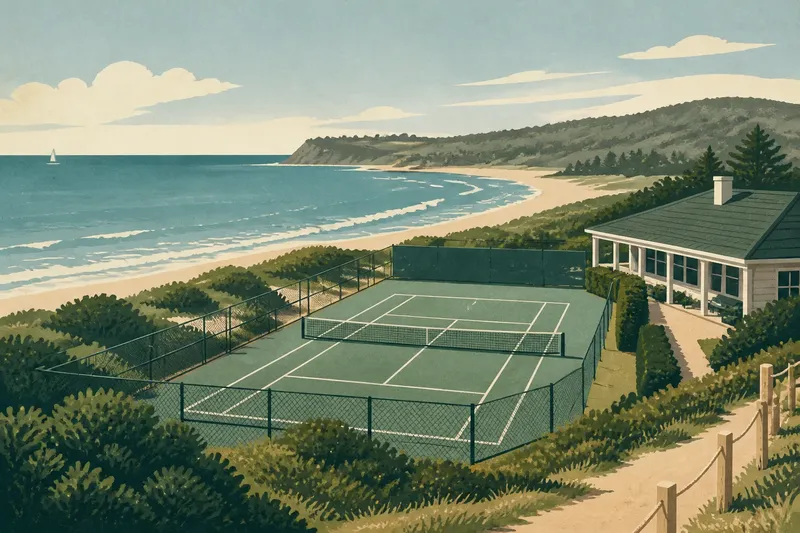
The common mistake on the way to a coastal tennis match is following the shoreline path to the nearest-looking court fence instead of finding the public entrance. That can leave you outside a private boundary while play is underway. Check how spectators enter before choosing the promenade or a back street.
Find the visitor entrance before choosing a coastal tennis match route
Coastal courts may sit behind a seawall, a row of buildings or a club boundary. The shoreline path can pass close to the courts without connecting to reception. A street address or named visitor gate is a better destination than a map pin placed on the playing area.
Read the club’s visitor directions and note the entrance name, reception address and any nearby public landmark. If the directions name a pavilion or gate, use that point. Do not assume that a service entrance or opening in a fence is for spectators.
Keep the choice focused on matchday access. The promenade is often easy to recognize, while a back street may lead more directly to the club entrance. Neither route is automatically better: the useful one is the route that brings you to the stated visitor access without crossing private space.
The promenade keeps the shoreline in view
A promenade approach passes through public space. You may share it with walkers, cyclists and beach visitors, and familiar features such as a pier entrance or café can help you identify where you are. It can suit a group meeting near a public landmark before heading to the match.
The shoreline path may run alongside the courts without reaching the club entrance. Check the named turn from the promenade to the visitor gate. If that connection is unclear, do not follow a court fence hoping to find another way in; use the entrance shown in the club’s directions.
On a busy path, keep your tennis bag close and leave room for others to pass. Once you reach the club boundary, move out of the public flow before checking directions or asking about access.
A back street can bring you closer to reception
A back street may lead toward a reception road or club gate, especially if the public entrance faces the neighborhood rather than the shore. Look for the street name or sign specified by the venue. A plain gate or modest club sign can be easy to miss if you expect a large entrance.
Stay on public streets and paths. Do not cut across a driveway, enter a staff area or use a side gate because it seems closer to the courts. If the marked turn is unclear, stop somewhere safe and check the club’s directions before proceeding.
Choose this approach for the access it provides, not just because a map line looks short. The matchday destination is the visitor entrance or reception, not the court itself.
How should you choose between the promenade and the back street?
Check the entrance, the final turn and the walking conditions before setting out. Use these observations to make a clear choice:
- Visitor gate: Check whether the club names a public gate or reception address. If it does, set that as your destination; if it does not, contact the venue rather than aiming for the court fence.
- Promenade connection: Check for a named turn from the shoreline path to the entrance. If the connection is clear, use the promenade; if it is not, take the signed street approach or ask the venue for access directions.
- Back-street access: Check for a named public street and a visible club sign. If both are clear, use the street; if the turn or gate is uncertain, stay on the known public route and confirm the entrance.
- Path conditions: Check whether the public path is crowded or difficult to walk with your bag. If it is manageable, continue along it; if it is obstructed, use a clearly signed public alternative.
- Meeting point: Check whether everyone in your group can identify the same public landmark. If they can, meet there; if they cannot, agree on a named entrance instead.
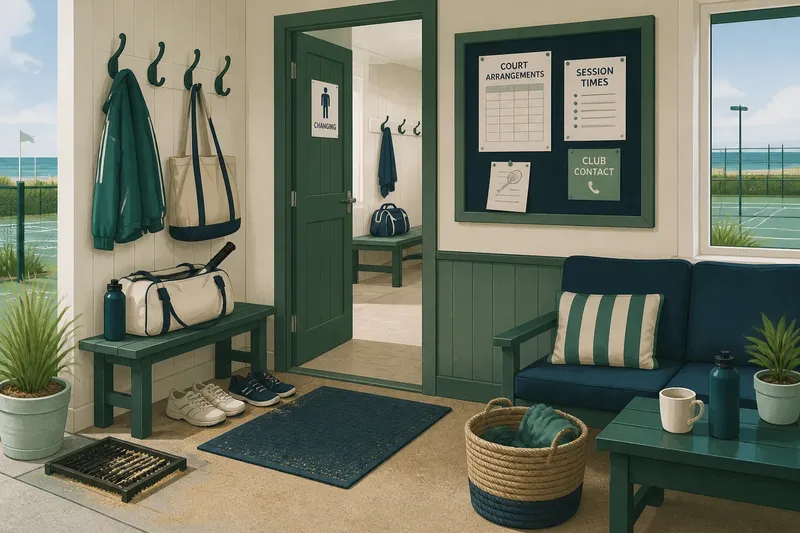
- Check-in point: Check whether reception is separate from the grounds entrance. If it is, go to reception first; if visitor directions name a different check-in point, follow those directions.
Say you are meeting a friend for a late-afternoon match. The club directions name reception on a side road, and the promenade junction to that road is not marked. You check the street sign at the side-road entrance, then follow that public street to the reception sign. At the gate, you can read “Reception” and enter there; you have reached the check-in point without searching along the court fence. If the street sign or reception marker were missing, the sensible next move would be to ask the club for directions rather than try a private-looking shortcut.
Which route questions matter on matchday?
Can you walk along the promenade to every coastal tennis club?
No. A promenade may pass near the courts without connecting to the visitor entrance. Check the club’s stated access point and stay on public paths.
Is a back street always the fastest way to the courts?
No. A direct-looking street can lead to a service gate or an unclear turn. Choose the route that clearly reaches reception or the designated visitor entrance.
Where should you meet someone who has not visited before?
Choose a public landmark both people can identify, such as a named café or marked promenade entrance. Agree that you will continue from there to the club’s visitor gate.
Should you change routes if the promenade is crowded?
Use a back street only if it is a public, clearly marked way to the entrance. If its access is uncertain, stay on the promenade and allow room to move around other path users.
What is not worth the effort?
Searching for an unofficial cut-through is not worth the trouble. A gap behind the courts may be private or intended for staff, and it will not help you check in properly. You also do not need to turn the walk into a shoreline tour if your aim is to reach the match.
For a coastal tennis match, make the entrance—not the scenery or the apparent shortcut—the deciding point. The promenade suits a clearly connected public approach; the back street suits a clearly marked route to reception. Once you reach the visitor gate, follow the club’s signs and keep the court area for the match.